The autumn transition has begun, and it’s apparent in my home because the start of the festive season is upon our household. Something particularly beautiful about a Sephardic Rosh Hashanah table is the abundance, colours in many dishes, and that it’s filled with foods that carry a little more meaning than what might first appear on the plate.
In my family, with our Egyptian roots and Sephardic traditions, the New Year is marked not only by gathering around a beautiful table, but by the simanim—symbolic foods accompanied by blessings for the year ahead. Lucky for me, I get to have more than one New Year celebration, so good food is always on the menu.
I opted to put a little twist on a classic dish that my family loves, and quite a common dish you’ll find in many households. Rather than simply apples and honey, our seder (yehi ratzon) blessings brings together foods such as dates, leeks, black-eyed peas, or squash, and other ingredients chosen for the hopes they represent: sweetness, prosperity, abundance, and a good year to come.
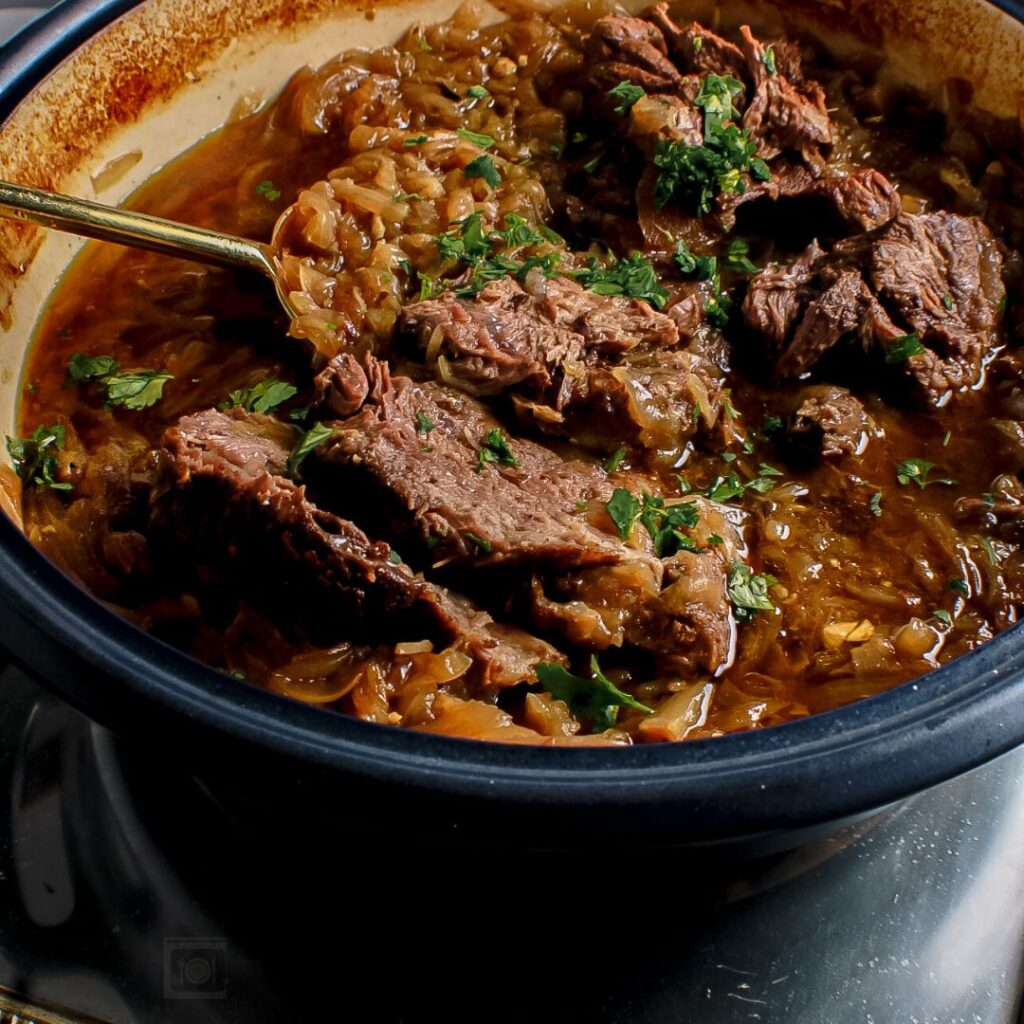
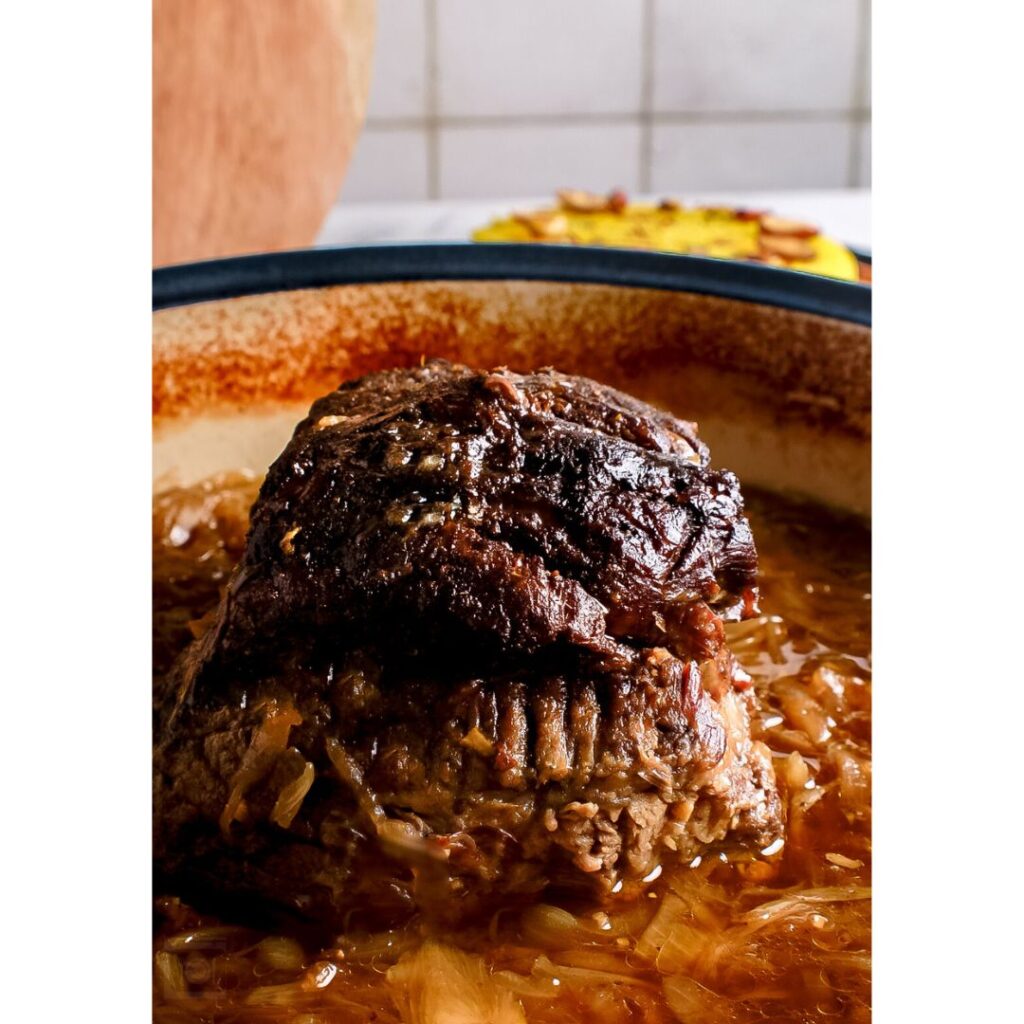
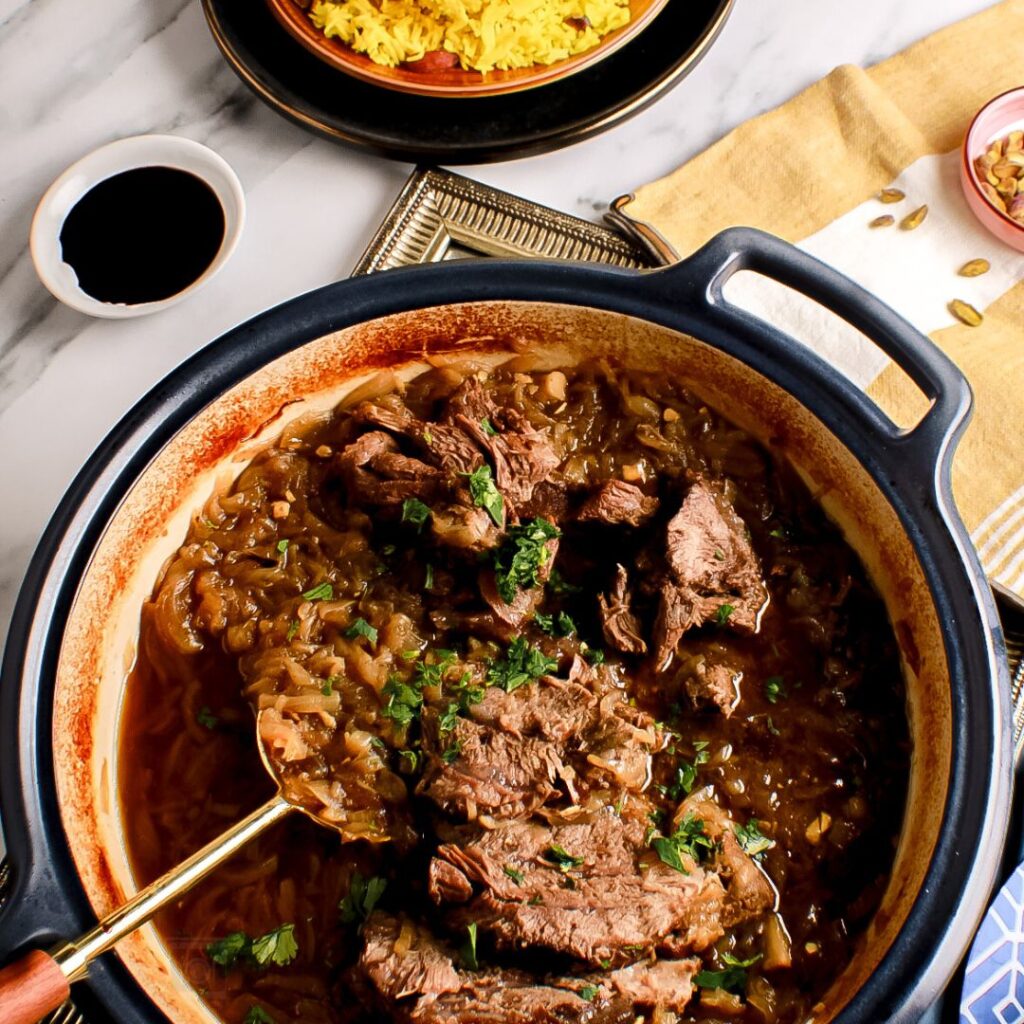
I wanted to make Lahm Basal, also known in some families as Kabab Halla (or Kebab Hala), as we make it with beef or lamb. This is not by any means a special ocassion dish, it's quite a typical everyday staple dinner. This one is made with a twist, using my homemade ras el hanout spice blend because I had it on hand. This is one of those wonderfully unfussy dishes that becomes something extraordinary with time. The name essentially translates roughly to kabab or “meat in a pot,” and the preparation is wonderfully simple: a rich comforting meal that’s versatile and can feed a lot of people.
I love this time of the season because it makes the meal feel almost like a conversation with the year ahead; every dish has a little story to tell. But let’s get into what I’ve prepared for you.
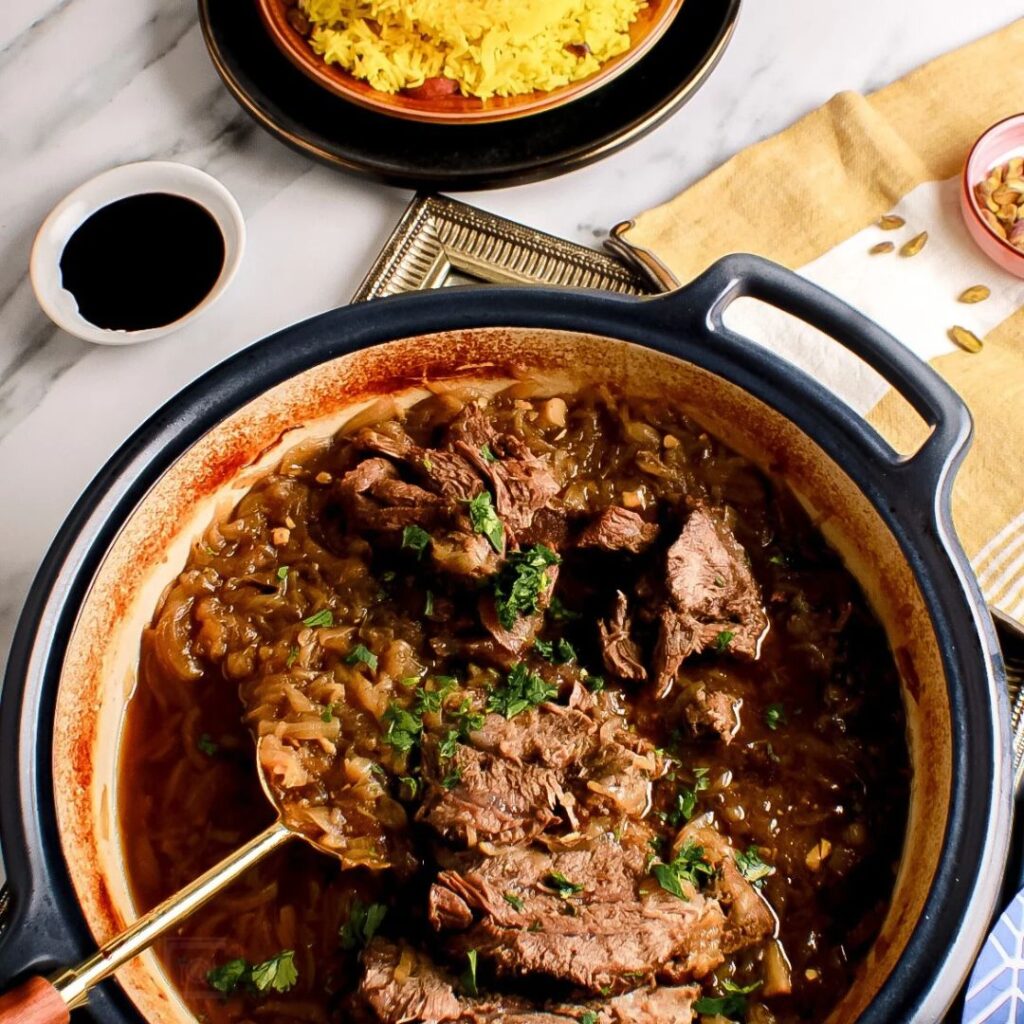
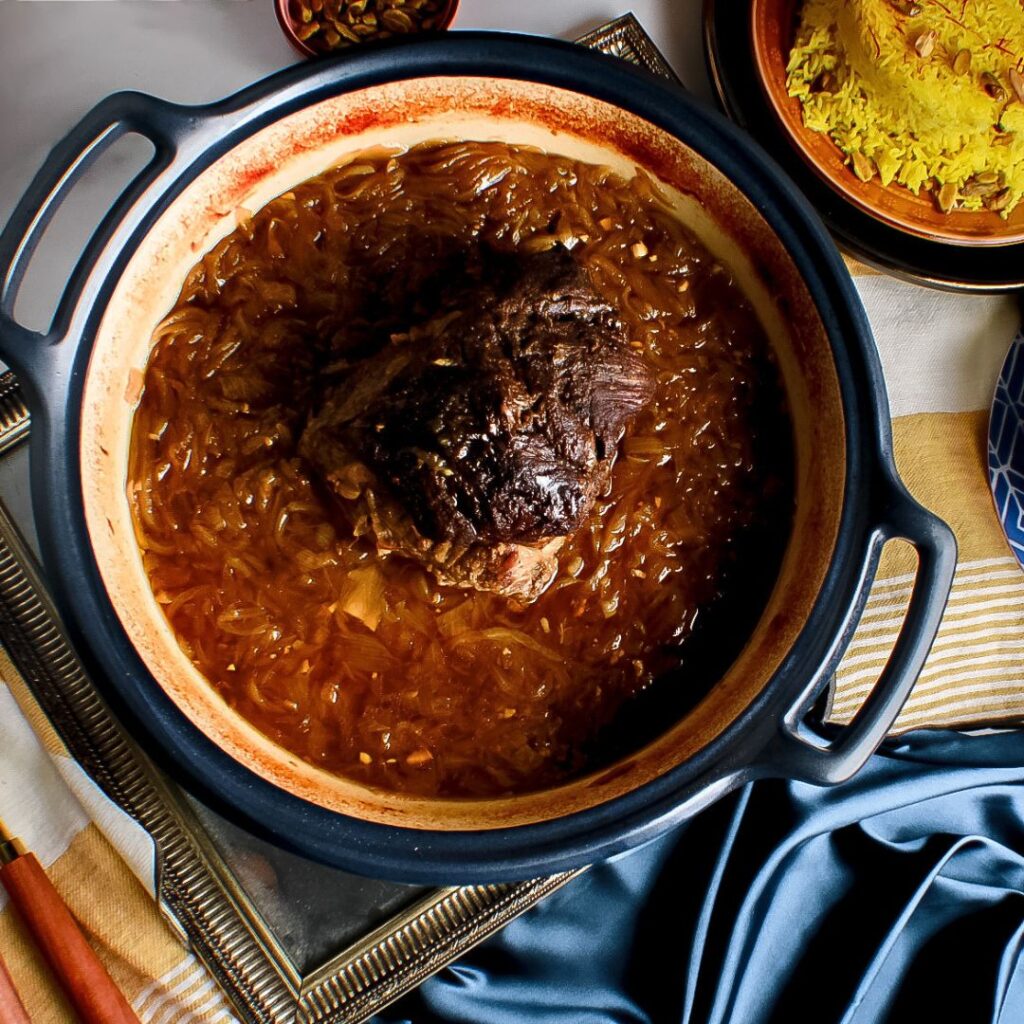
The mountain of onions gradually melts down, allowing the beef to transform into a deeply rich mahogany colour and adding a naturally sweet, savoury flavour. There is no cornflour-heavy gravy here and very little fuss—just delicious ingredients, patience, and the gentle alchemy of slow cooking.
Served alongside the simanim, warm bread, and the other dishes as part of the feast, this is the kind of meal that invites everyone to linger a little longer around the table, whether they’re attending for the first time with a loved one or celebrating afar.
Kabab Halla (or Lahm Basal), is a traditional Egyptian Jewish everyday meal with a naturally sweet, onion sauce. This one is with a twist of spices using ras el hanout.
Serve with pita bread and rice, or with alternatives mentioned in the FAQs below.
Storage: This will keep in the refrigereator for up to 3 days. Freeze for up to 3 to 4 months.
For this recipe, I used a top-blade cut and left it whole. I like a blade steak for this because it is a bit more tender, flavourful, and has a good amount of fat for this dish to give it the richness needed. If you are using a slow cooker you can just use a chuck roast. Both cuts are taken from the shoulder (chuck primal) area of the cow, and will work well.
This recipe uses kosher salt. This is a lot of meat and it needs to be seasoned. Depending on the brand of kosher salt you use, you may or may not need to season it a bit more but I recommend following the recipe, then sprinkle more if needed before serving.
Thanks so much for your support!